
Manufacturing software development
Manufacturing software for connected production control.
We help manufacturing teams improve MES, ERP, IoT, inventory, quality, and reporting workflows while protecting the process knowledge already embedded in shop-floor routines and legacy systems.
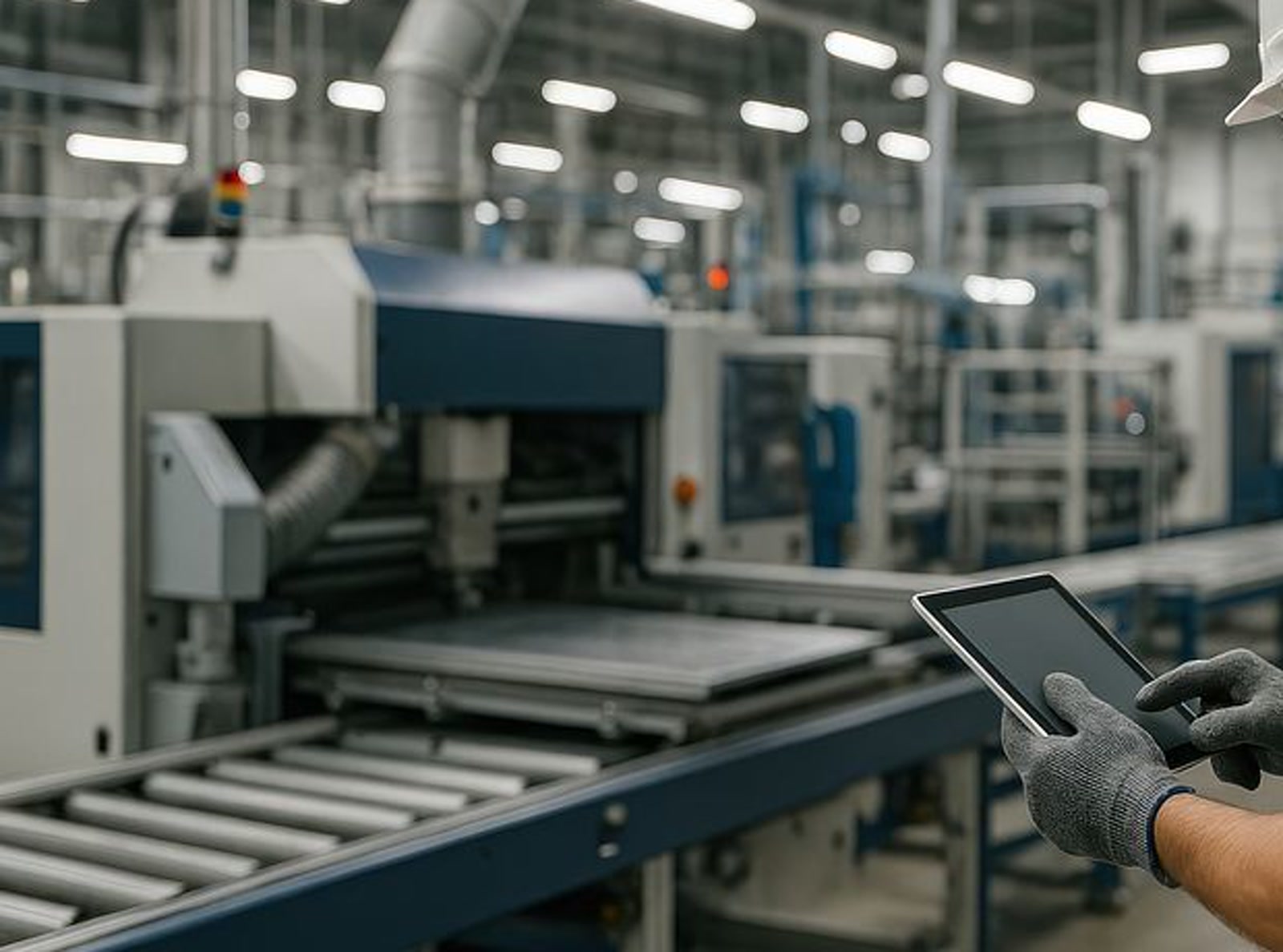
Representative case model 01
Production visibility and intranet tools for operational teams.
A representative manufacturing workflow model connects internal tools, product data, sales material, invoice records, and SQL-backed business data. The model is anonymous and avoids real client or project identity.
Product data, invoice status, and document pack stay in one staff view.
What the platform handled
Operational data became easier for staff to find, use, and maintain.
The work connected multiple internal applications and business records so teams could manage production-adjacent information without relying on fragmented files or isolated database access.
- Internal tools
- Operations apps for product, invoice, sales, and documentation workflows.
- Data layer
- SQL-backed records surfaced through practical intranet interfaces.
- Workflow
- Staff access, updates, review, reporting, and operational evidence.
- Outcome
- Clearer ownership of manufacturing business data and easier long-term change.
Keep product, order, station, and material information connected to the daily operating view.
Surface invoices, documents, sales materials, and SQL data through safer internal tools.
Modernize in stages so process knowledge moves into maintainable systems.
Representative case model 02
Quality and inventory exception workspace for production teams.
A second representative workflow model focuses on the moment where production cannot simply keep moving: a quality hold, a material shortage, a failed check, or a mismatch between shop-floor and ERP records. The example is anonymous and uses created interface visuals.
- Quality flow
- Inspection plans, failed checks, evidence capture, rework, and release decisions.
- Inventory flow
- Material shortages, WIP variance, finished-goods movement, and reconciliation.
- Operating flow
- Exception ownership, station impact, approval history, and reporting output.
Line 02 release review
Hold, review, approve, release, and report from the same context.
Ready to apply the pattern?
Have a production, quality, or inventory workflow that needs a practical first step?
Share the workflow shape without naming the project or customer. We can help identify where to start, what to protect, and how to turn a fragile operating path into a controlled delivery plan.
Read the ordering and delivery tracking case Discuss a Manufacturing WorkflowHow we work
Start where the production flow is fragile, then improve in controlled stages.
Manufacturing software work needs a careful handoff between current process knowledge and future system design. We map the live operation before introducing automation, integration, or modernization.
The work starts with live production context: people, stations, materials, evidence, and system rules. The first release should reduce friction in one real path before the platform expands.
-
01
Observe the shift
Follow a live order, station handoff, material move, quality check, and report output.
-
02
Find the rule breaks
Separate process rules from workarounds hidden in spreadsheets, SQL jobs, and staff memory.
-
03
Release the pilot path
Improve one operator or staff workflow with clear status, ownership, evidence, and rollback.
-
04
Scale from proof
Extend integrations, dashboards, automation, and reporting only after adoption is visible.
Evidence gateCurrent screens, exports, edge cases, and owner decisions.
Release gateDowntime plan, rollback path, operator sign-off, and support window.
Scale gateERP sync, reporting needs, integration contracts, and ownership model.
Related insights
FAQ
Manufacturing software development questions.
Are the examples on this page real client projects?
They are representative anonymous workflow models created for this page. They avoid real client names, project names, production screenshots, and identifying operational details.
Can you modernize a legacy production system?
Yes. We can help discover existing rules, map dependencies, stabilize key workflows, and modernize in stages so production knowledge is not lost during the change.
Can you connect MES, ERP, inventory, and reporting?
Yes. We can connect work orders, production progress, inventory movement, purchasing, finance, quality checks, and reporting so the shop-floor and back-office view stays consistent.
Can IoT or equipment data be used in workflow software?
Yes. Machine, sensor, and device data can support monitoring, alerts, quality checks, performance reporting, and maintenance workflows when it is connected to useful operating decisions.
How do you reduce disruption during manufacturing system changes?
We focus first on critical production paths, data reconciliation, rollback planning, and staged releases so modernization can move forward without surprising daily operations.
Improve control across production, inventory, and quality.
Talk with Shinetech Qingdao about the MES, ERP, IoT, intranet, dashboard, or modernization challenge behind your manufacturing operation.